
Awareness campaign
CEACOG (Centro Español de Accesibilidad Cognitiva)
Challenge
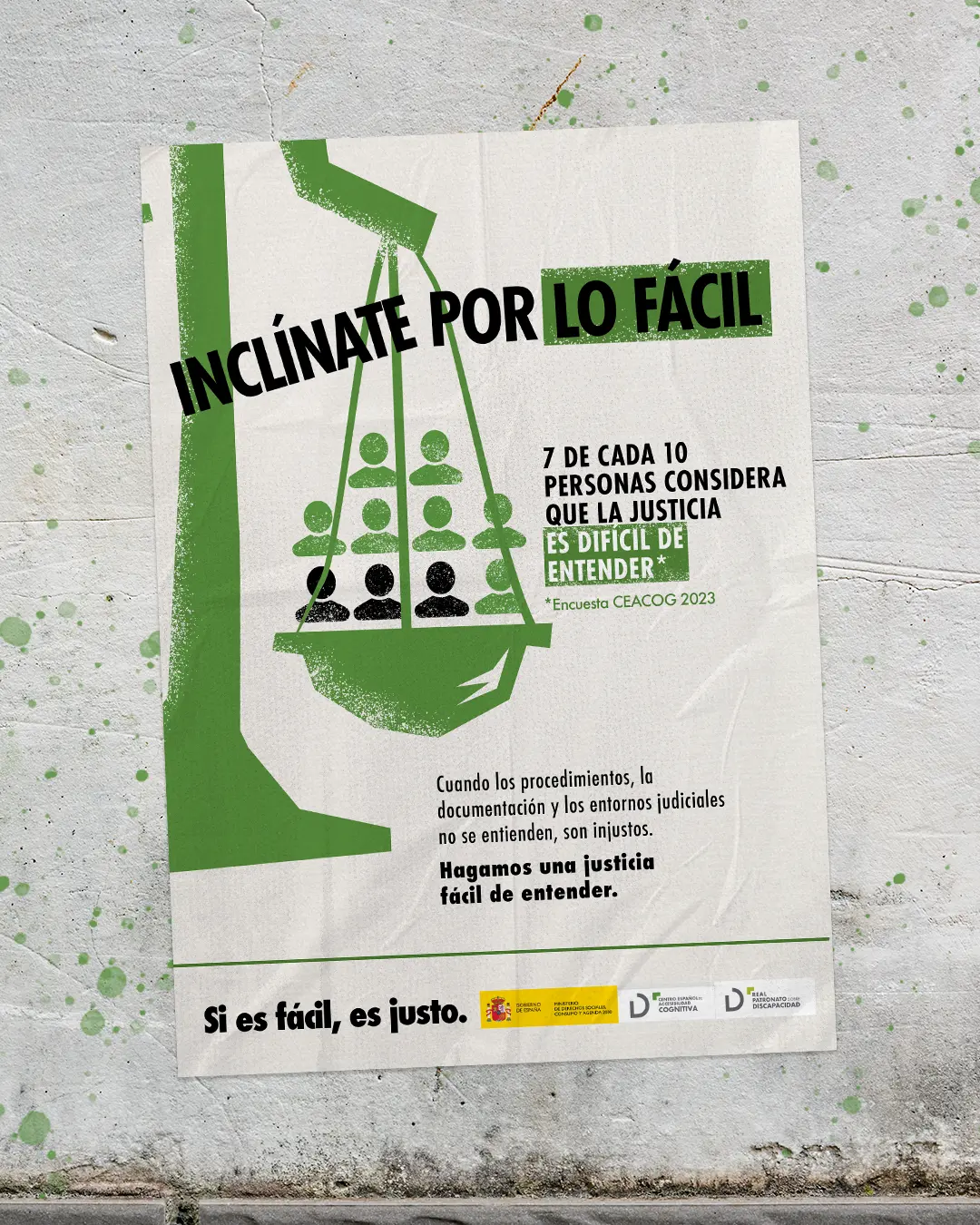
In Spain, 7 out of 10 people do not understand the justice system. They do not understand a court ruling, do not know how to file a complaint, or do not understand what happens during legal proceedings. This lack of understanding places millions of people at a real disadvantage: if you do not understand, you cannot exercise your rights on an equal footing. The challenge was clear: to highlight that cognitive accessibility is not an optional improvement, but an essential condition for justice to be truly fair. And to do so by directly engaging those who have the power to change it: the people who work within the judicial system.
Solution
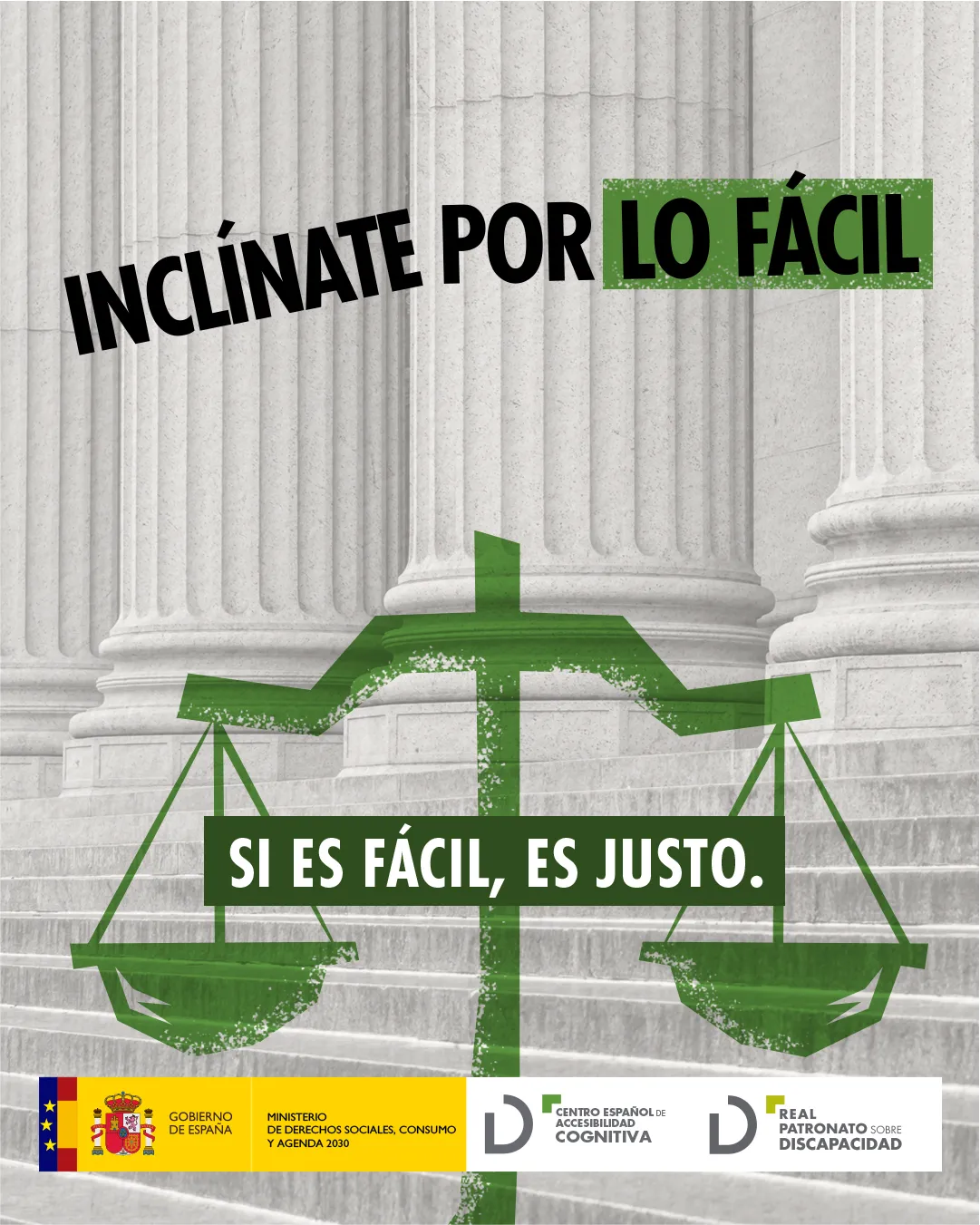
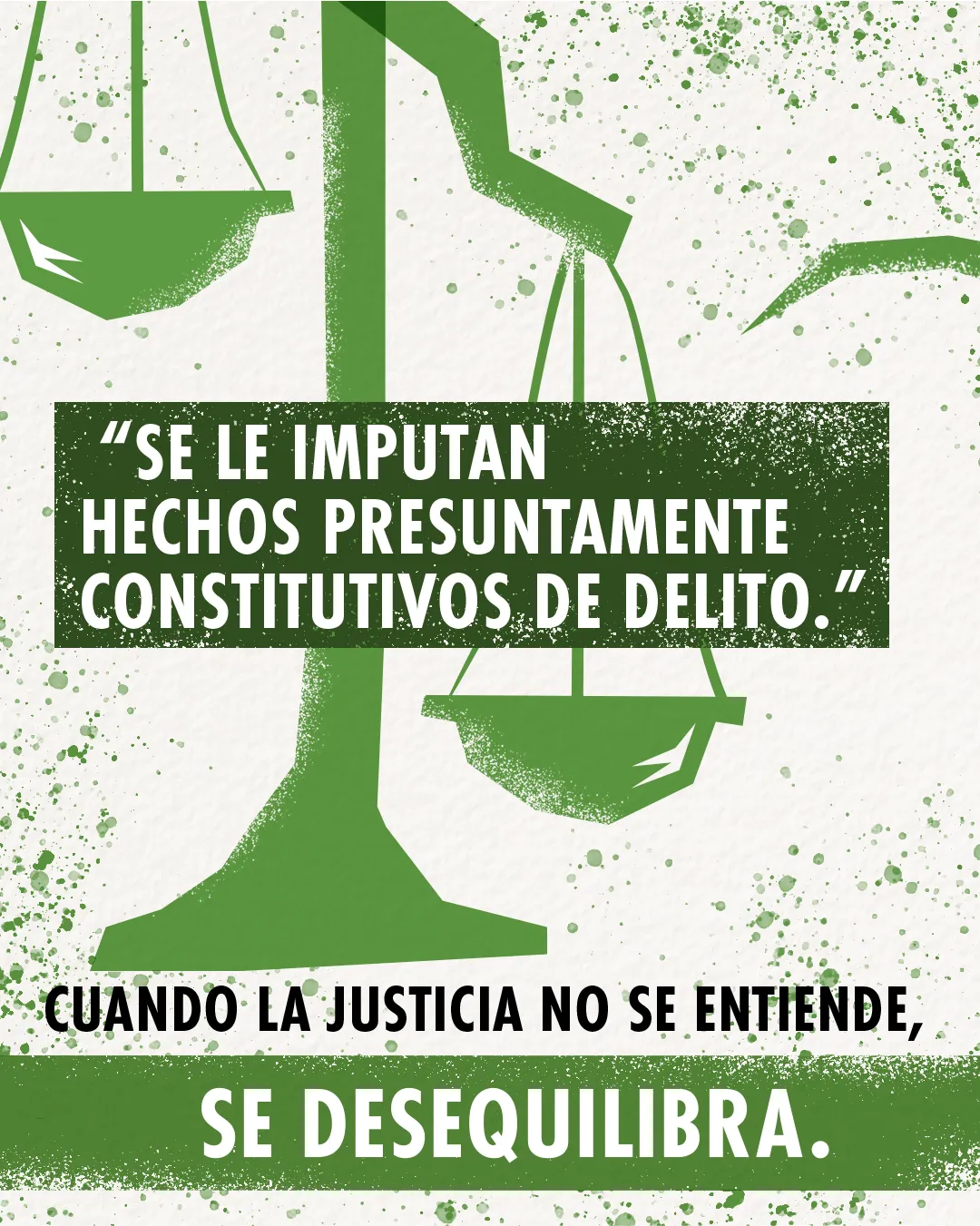
The “Go for the Easy Way. If It’s Easy, It’s Fair” campaign was built on a clear idea: when justice is hard to understand, it ceases to be fair. Based on this insight, we used the scales (the universal symbol of justice) to represent an unbalanced system, tilted toward complexity by the weight of technical language, confusing procedures, and a lack of support. The campaign proposes a straightforward action: tip the scales toward simplicity. Make legal documents, processes, and court environments understandable to ensure equal access to justice.
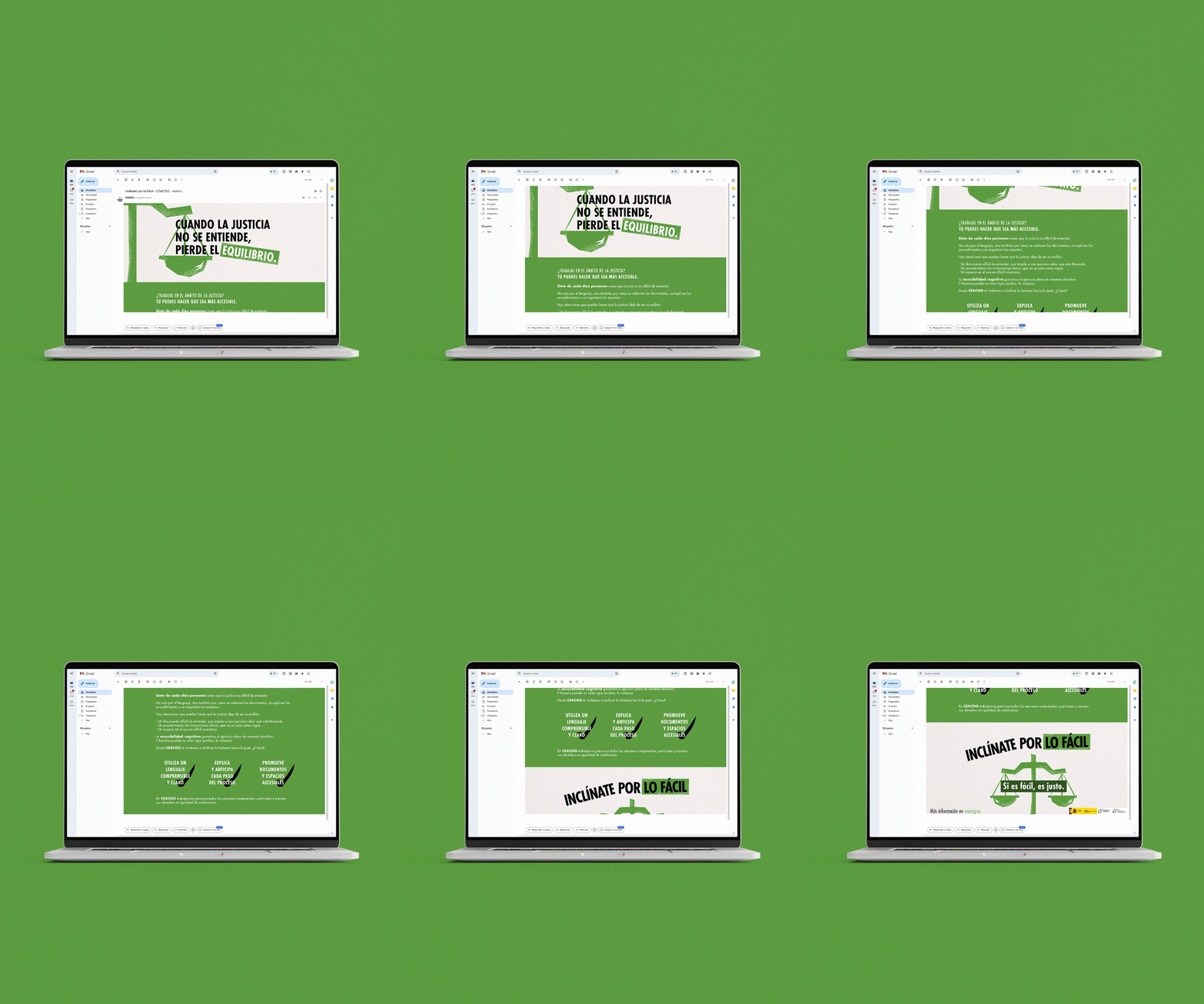
The message was directed at legal practitioners through various materials and channels, with the goal of raising awareness and bringing about real change within the system. The result was a clear and educational campaign that brought structural inequality to the forefront and turned it into a shared responsibility.
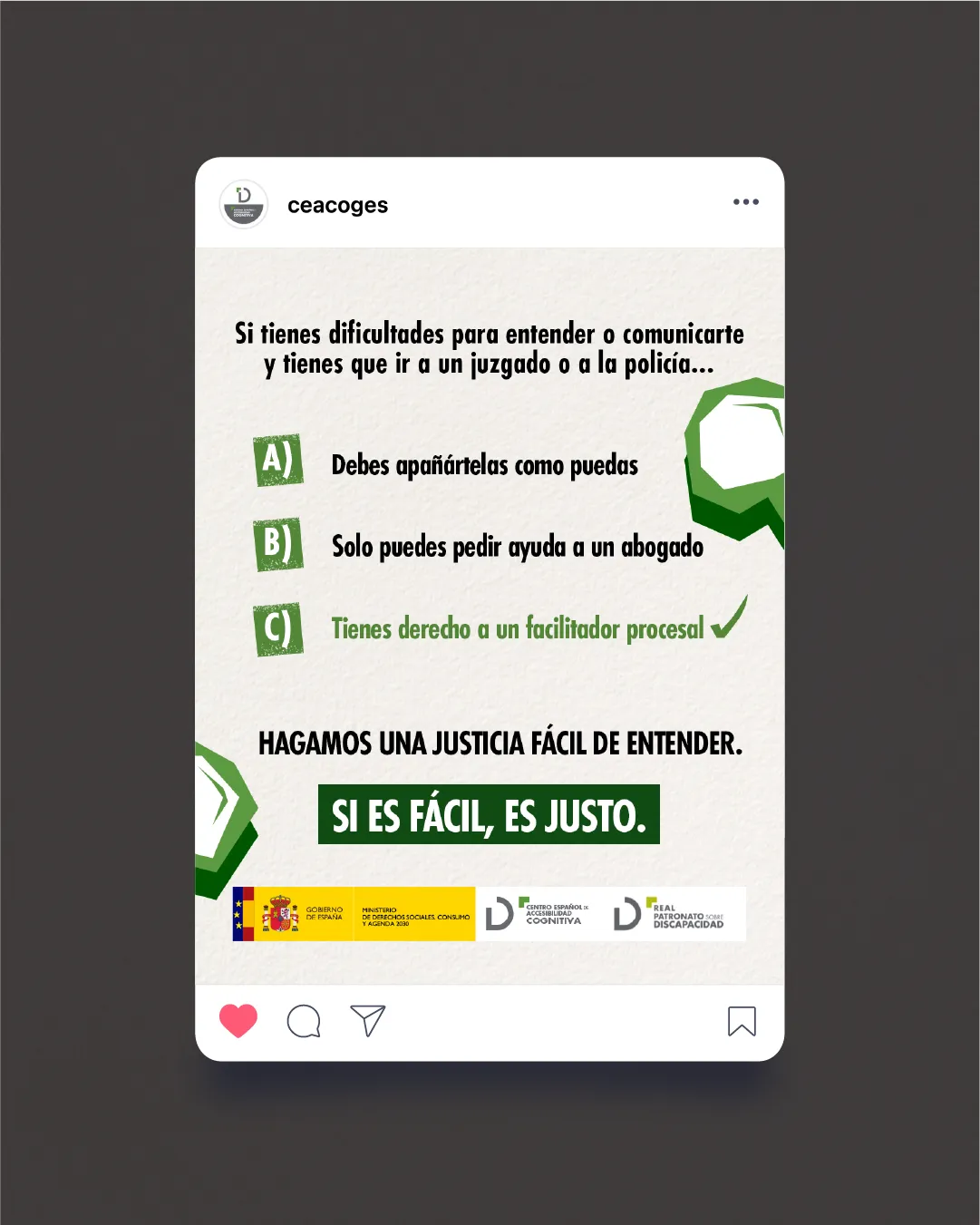
SOCIAL MEDIA
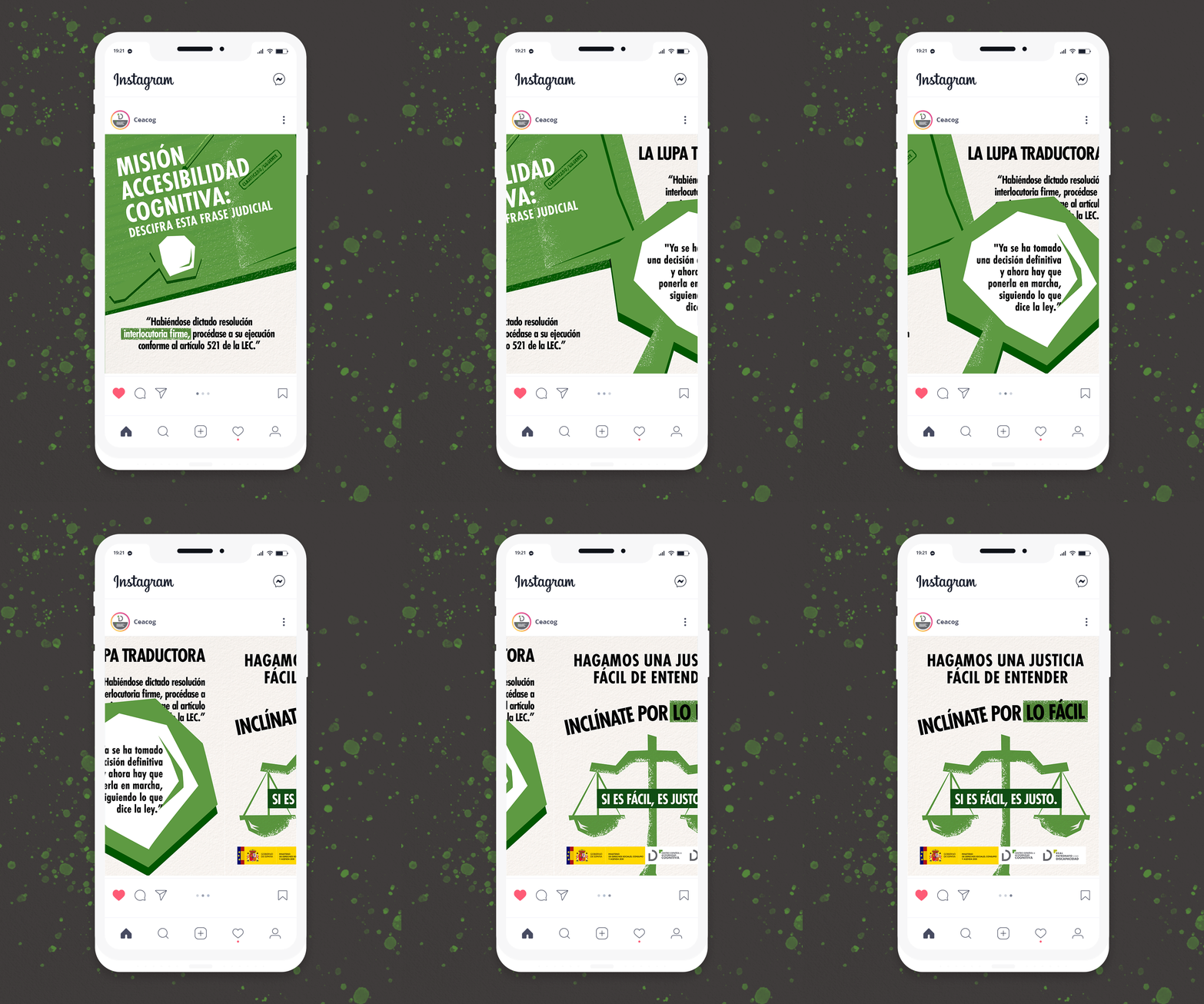
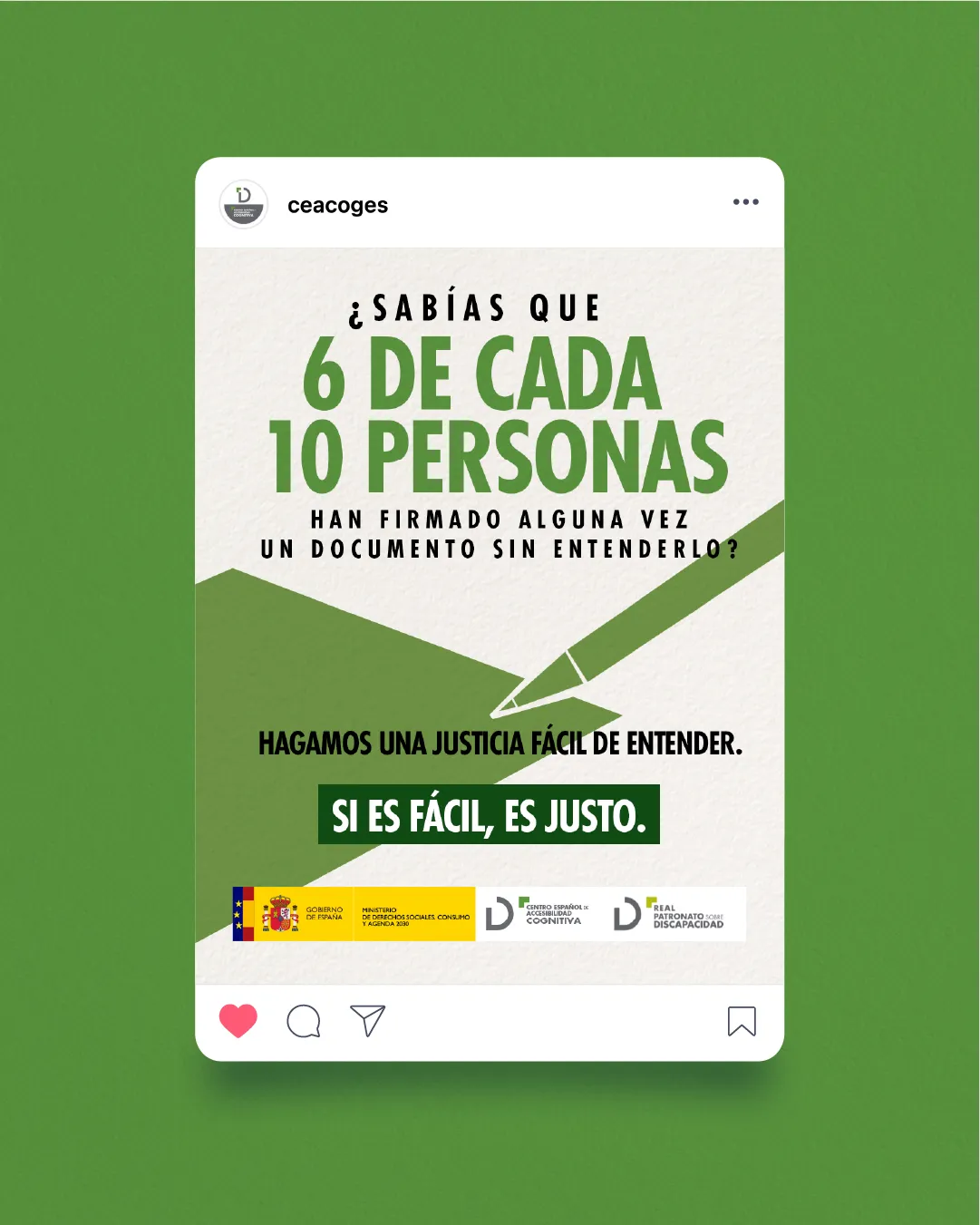
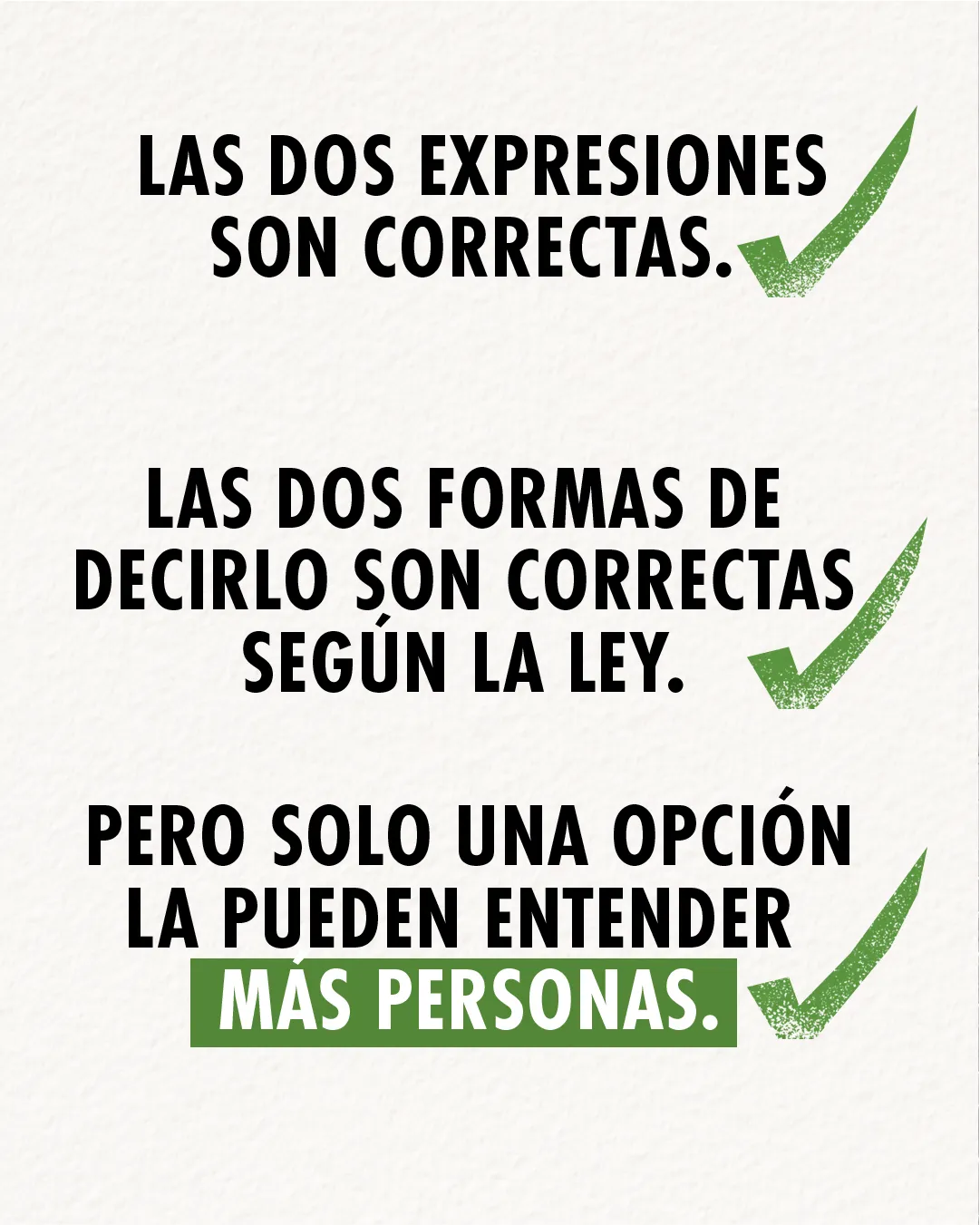
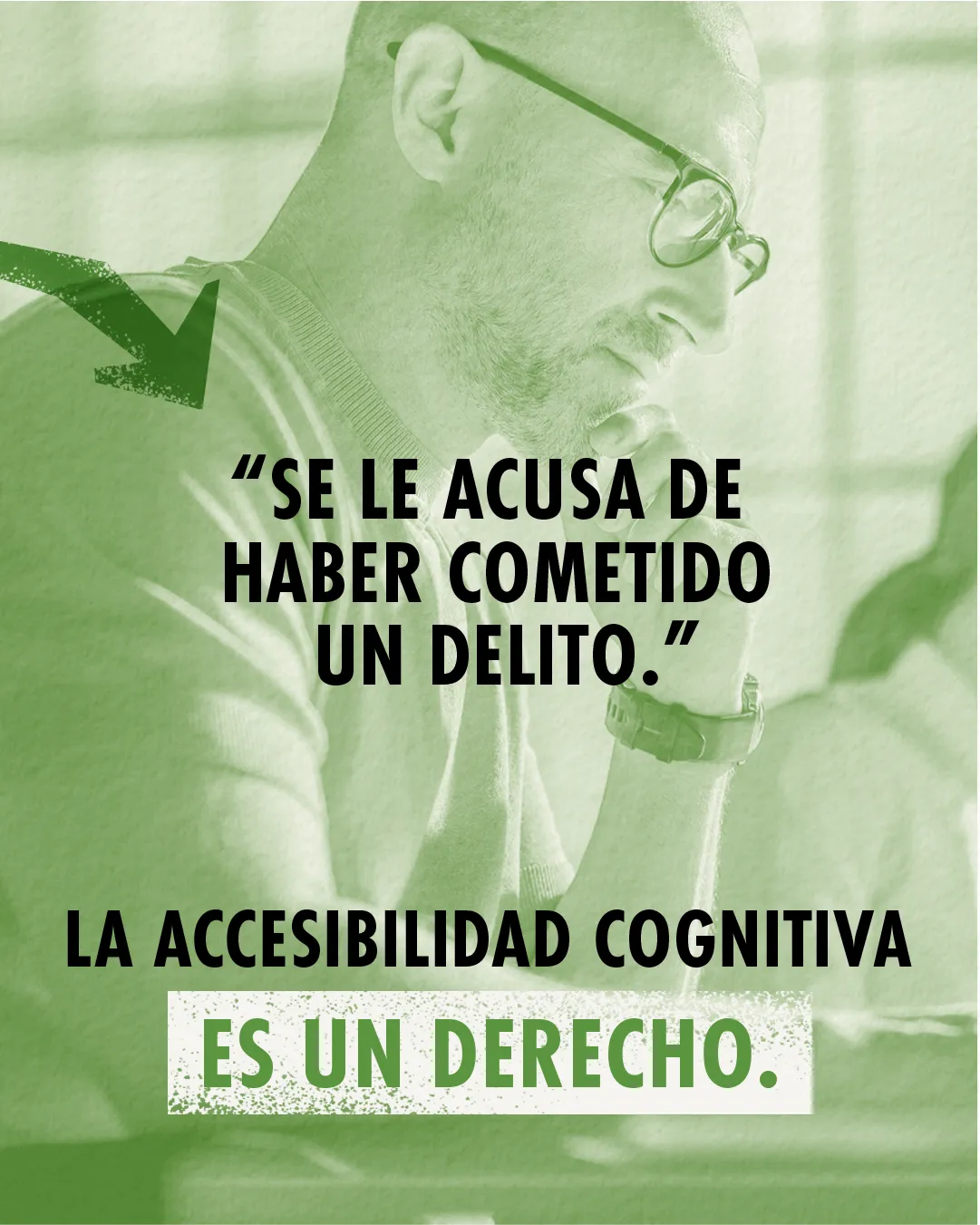
On social media, the campaign used clear and accessible language to amplify the message and make it understandable to all citizens. Through carousels, Reels, street interviews, and explanatory content, the campaign conveyed the importance of cognitive accessibility and its impact on people’s real lives.
A strategy designed to inform, raise awareness, and reinforce the idea that a justice system that is not understood leads to inequality.
MULTIFORMAT CAMPAIGN
The campaign was rolled out through various materials, including a main video, graphics, and digital content, which helped spread the message across different sectors of the legal and social spheres.
In addition, the campaign was presented at the State Attorney General’s Office, placing cognitive accessibility at the center of institutional discourse and reinforcing the need to move toward a justice system that is understandable to everyone.
This strategy was designed to have an impact at both the symbolic and structural levels, demonstrating that making the justice system easier to understand is an essential step toward guaranteeing rights.
Do we see more projects?

